“Boeing is stronger and more competitive than ever”

Propos recueillis par Fabrice Gliszczynski
Propos recueillis par Fabrice Gliszczynski
How will Boeing be presenting itself at the Paris Air Show?
In our 101st year Boeing is stronger and more competitive than ever, and we are bringing more innovation to the marketplace than at any time in our history. We are well positioned for the future and to seize a major portion of the commercial, defense and service sectors, which we see as an approximately U.S. $7.5 trillion over the next ten years.
What are the major challenges that Boeing will face in coming years?
One of our key challenges will be to deliver on our almost $500 billion backlog. That creates a great opportunity for us as we ramp up our commercial airplane business. We are ramping up 737 production and introducing the new MAX in parallel with that. We have new airplanes entering service in the 787 family with the introduction of the 787-10 and we are continuing on the development of the 777X. (the new version of the 777 slated for 2020, editor's note). In the defense sector, we have a number of new development programs under way, such as the T-X trainer aircraft. We are also delivering our new aerial refueling tanker, the KC-46, to the United States Air Force. We will complete delivery of the first 18 aircraft over the next year.
Lastly, in July we will be launching a new business, Boeing Global Services (BGS), which will be fully-operational in the third quarter of 2017. We see services as a big growth opportunity for our company.
For more than a year, we have seen weakening orders, particularly in the area of jumbo jets. How do you explain that?
We actually continue to see a healthy commercial airplane market and a healthy orders pipeline. At the end of April, we had booked 205 net orders, roughly the same rate as last year. We still expect overall orders for 2017 to be similar to what we saw in 2016 (787, editor's note). Traffic growth continues to be very strong. We have seen about 8.8% growth year-to-date compared to an historical average of 6% annual growth. We have roughly 7 years of backlog - it is very diverse, spread around the world, so we are not dependent on any one particular region. That depth and diversity of backlog gives us great confidence for the future.
Relatively inexpensive oil prices are leading some airlines to keep their current fleets longer than planned and postpone the replacement of their fleets and consequently deliveries, particularly for long-range airplanes. Does this worry you?
Again, we continue to see the overall market as strong. It is fair to say that we have seen some hesitancy in wide-body orders, but even with that, we have received 43 wide-body orders year-to-date. Now, it's true that some airlines are making those kind of decisions to retain their fleets and extend their current fleets. Typically, in the past, those have been around 5 to 6% of backlog. We continue to see orders - or deferrals and cancellations of 1 to 2%, well below historical averages.
At what point could the jumbo jet market pick up again?
We see a very significant widebody replacement cycle at the start of the next decade. We are very well positioned with the 777 and the 787 to address that demand. Over the next two decades, the world will need 39,600 new commercial aircraft, nearly 9,000 of those are wide bodies.
L’actualité qui compte pour vous, chaque jour dans votre boîte mail.

Will the Paris Air Show be a good year in terms of orders?
Orders are just one dimension of the air show, but we expect a similar orders flow to what we have seen in previous years.
The volume of the Airbus and Boeing backlogs is such that companies have to wait several years between ordering and delivery. How are you going to increase the production pace to decrease the waiting time?
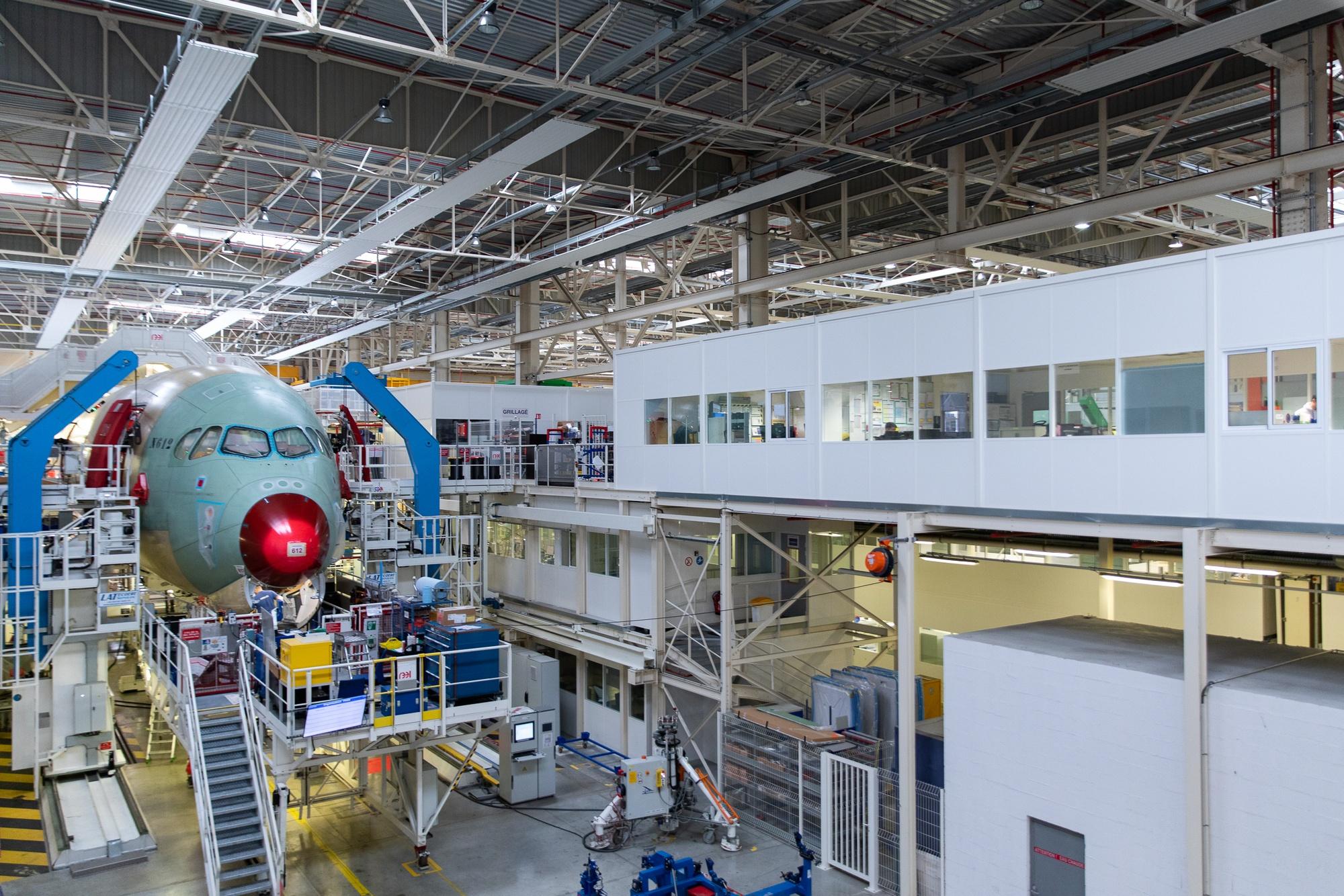
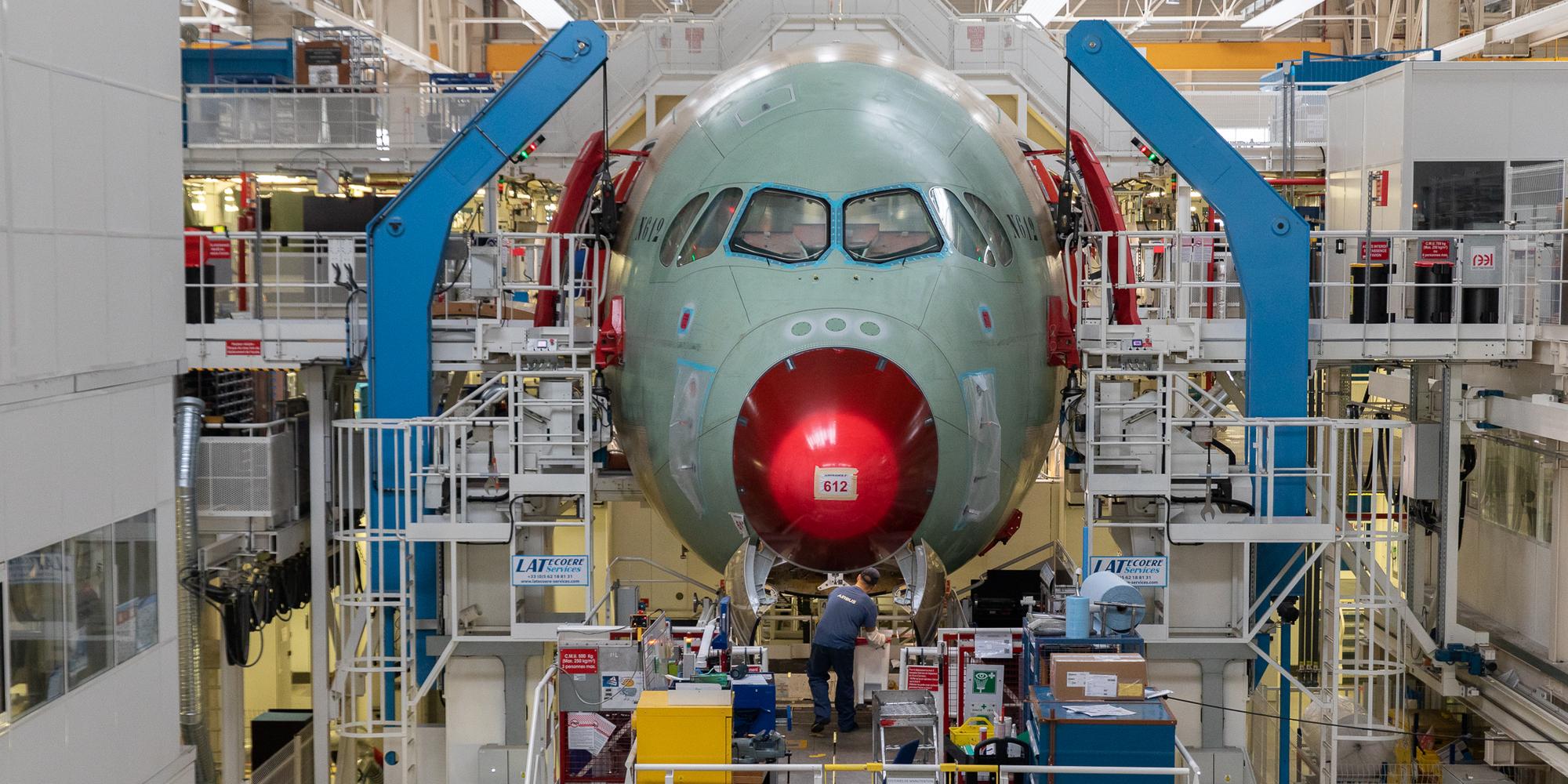
As we introduce the new MAX airplane we are ramping up the 737 production rate from currently 42 airplanes per month to 47 in the third quarter of this year, then 52 next year, and finally 57 in 2019. Still, against this increasing production profile, we continue to be over-sold. We actually see market demand and signals from our customers that give us a capacity to go even higher than that. With regard to wide-bodies, we are very focused on filling the production bridge on our 777 line as we transition from the 777 to the new 777X. We still have some work to do there, but when we look at 2018 and 2019 we are about 90% sold out. As for the 787, our production rate is 12 airplanes per month and we are currently considering raising it to 14 a month towards the end of the decade. Overall, we will produce and deliver about 750 commercial airplanes this year. By the end of the decade, we will be delivering well above 900 airplanes a year. So, this is a strong, growing business.
Boeing started presenting the B737 MAX-10, a lengthened version of the B737, to challenge the success of the A321neo. Is a launch planned for the Paris Air Show?
We are continuing to have productive discussions with our customers. We have not made a launch decision, but we are having very productive conversations understanding customers' needs. If we do launch the 737 MAX-10, it would enter service in the 2020 time frame. It would have roughly the same capacity, seat count, as the A321neo, but have roughly 5% lower operating cost because of its weight advantage, so it would clearly provide superior value in the marketplace. The 737 MAX-10 could potentially take on 20% to 25% of the overall single-aisle market over the next twenty years.
Last year you mentioned the idea of launching a new airplane for the "Middle of the Market," a market segment ranging from 200 to 300 seats with the heart of the market being between 220 and 260 seats. What is your thinking now?
Here again, we are having productive discussions with our customers. We do see a marketplace, positioned between the 737 (200-210 seats, editor's note) and the 787 (242 seats for the B787-8 in the basic configuration, dual-class, editor's note) families. It can be addressed in several ways. We are evaluating our options.
What would this airplane be like?
We see that airplane being one that could potentially be an aircraft with a capacity of about 250 seats with around 5,000 miles (9,260 km) of range capacity. If we chose to launch it, this aircraft would enter service in the 2024 to 2025 time frame. And from a development standpoint, a research and development funding standpoint, it would feather in very nicely on the backside of our 777X development program.
Aren't you worried that Airbus will compete with you with the A321neo and A330neo?
Our competitor certainly has potential options for addressing this market segment, but I would argue that no matter how many plus signs you put on the A321, it can't really address that marketplace. It would be very difficult to address it with a derivative of an existing airplane.
The B787 launch in 2004 was paralleled by a new production organization relying on a multitude of subcontractors around the world. Could this new airplane be an opportunity to reorganize your production system in order to optimize it and reduce costs?
When we look to the future, we are going through a number of steps to transform our production system. Such a transformation is not dependent on the potential launch of a new Middle of the Market airplane. If we launched a new airplane, certainly we would leverage that production system transformation. We already have work underway that will make us even more competitive tomorrow. This includes use of automation and robotics in our production lines, and new digital design techniques that will help us in production and in servicing our airplanes. Some of those have already been implemented today on the 737 MAX and on the 787. Others are being delivered now as we prepare for the 777X. In fact, some of those advanced automation techniques are already being used on today's 777 line, as we prepare for the 777X. Our production system is experiencing an extremely important period of transformation from which we will no doubt benefit should we decide to launch a new Middle of the Market airplane.
In light of the success of the 737 MAX, when do you expect to launch a new medium-range airplane?
We are very focused on the 737 family today. Before we can think about future generations of airplanes, we are going to wait until we roll out our new airplane family and get the 737 MAX fully up to its production rate. We have just delivered the very first MAX airplane, actually ahead of schedule and under cost.
But not before 2030 for a new airplane?
That is correct.
The C919, the airplane by the Chinese company Comac, took off for the first time at the beginning of May. China and Russia have officially launched a long-range jumbo jet program. Do you think that China can genuinely compete with Boeing or Airbus?
Yes, we expect China to be a long-term competitor. It is not at all surprising that we are seeing new players in the commercial airplane marketplace. It is a very attractive market, which, as I said earlier, will account for US $7.5 trillion over the next 10 years. It generates manufacturing jobs and technology benefits. All of that should attract new and stronger competitors. We like to compete and competition will drive us to continue to invest in innovation for the future.
China is a very important market for Boeing. Of the 39,000 new aircraft that will be delivered over the next twenty years, about 6,800 of those will be in China. We are growing our local presence in China while we increase market share there. Consequently, we hope to collaborate with China while at the same time compete with them. This model, based on both collaboration and competition, is one that we will have in the future.
You have attacked the European system of refundable advances granted to Airbus and you accuse Bombardier of price slashing in the United States thanks to subsidies from the Canadian authorities. What do you have to say about the creation of an aviation industry in China that is massively supported by the government?
It is very important to be able to operate on a level playing field around the globe and for competition to be healthy. Recently, we had concerns about the Bombardier C Series introduction because of a dumping behavior in terms of pricing of the aircraft. We are eager to compete with companies from around the world. But what's important is to be able to compete on a level playing field anywhere in the world. Regardless of where our competitors are located, it is important that we operate with that principle in mind.
Are you satisfied with your French suppliers?
Yes. We work with more than a hundred French companies, some for more than fourty years. They are great partners. We do around 6 billion dollars of business per year in France through our direct and indirect supply chains. In the aerospace sector about 30,000 high-tech jobs are related to the partnerships that Boeing has established in France. We have a number of great examples of French partners participating in the different Boeing programs. All of our 737s, for example, are equipped with engines by CFM, the Safran and General Electric joint venture. Thirty-seven French companies are part of the 787 program and their products are among the most innovative and advanced in the world. A certain number of French suppliers are also well positioned to win new contracts for the 777X. And if we launch a new airplane, there is a strong likelihood that these partners will continue to work with us.
What can they do to improve?
It is a highly competitive marketplace and we continue to collaborate closely with our suppliers to improve cost, scheduled performance and quality - and continue to invest in innovation for the future. We therefore need our suppliers to continue to lean forward to invest for the future, to drive quality and cost performance, and competitiveness, and to accompany us on this journey of innovation.
SpaceX and Blue Origin are in the process of disrupting the launch vehicle market. Are GAFA a threat to conventional industrial groups?
Even though Boeing is stronger, healthier and more competitive than ever, we need to move forward and be ready for new players to enter our marketplace. The space market is just as attractive as the commercial aviation market. It attracts newcomers such as SpaceX, Blue Origin, and other companies in the high-tech sector that are working on low-cost access to space. Some of them have shown an interest in unmanned aircraft, satellite networks and telecommunications networks. In numerous cases these companies can be new competitors, but also new partners. For example, we are currently working with Blue Origin to develop a new rocket engine of our next generation rocket, to provide lower cost access to space.
The American defense industry has obtained huge contracts in Saudi Arabia. Does the Trump presidency offer new opportunities in terms of export contracts?
We see strength there. The current administration is working on a series of pro-business initiatives, such as tax and regulatory reform, and new trade policies. We are also seeing strength in the defense budget, both for sales in the United States and around the world. The work that we do on commercial airplanes and defense products can be part of enhancing those country-to-country relationships and mutually building economic and national security.
Propos recueillis par Fabrice Gliszczynski